
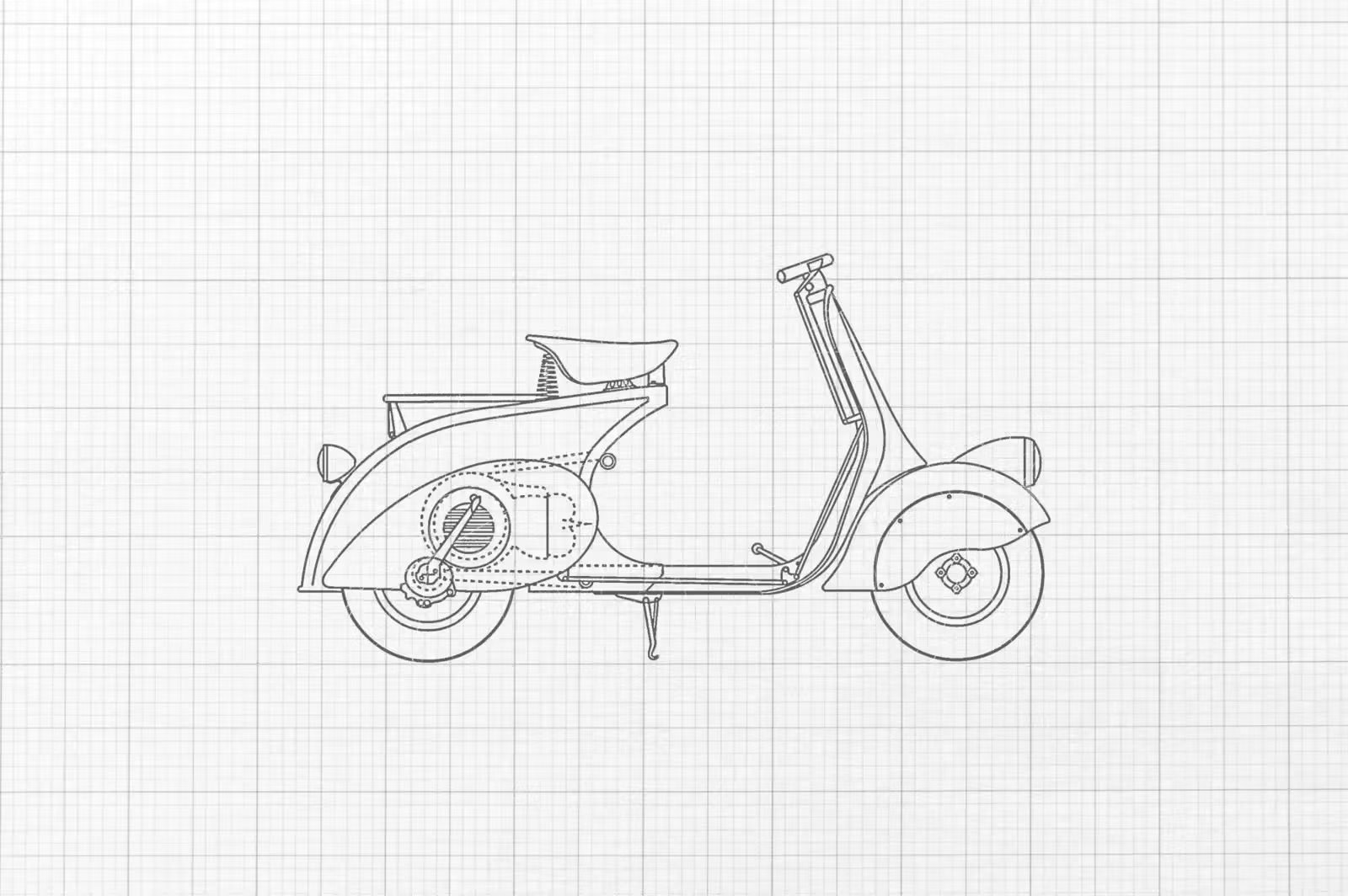

The new generation of automatic Vespa, which we also like to call the Modern Vespa, began in 1996 with the Vespa ET series.
The ET models are still very popular with their owners today. This is probably due not only to their shape and manoeuvrability, but also to their durability or simply the fact that you didn't have to adjust your helmet to the size of the Helmet Case. GTS riders know what we are talking about. These models utilised the engines already used in PIAGGIO and Gilera vehicles, which also enjoyed great popularity in the Vespa.
The following engines and displacements were installed in the respective models and also gave them their names:
ET2: 50 cc two-stroke engine of the 1st generation with Carburettor
ET2 Iniezione: 50 cc two-stroke engine with Fuel Injection Module
ET4 125 "old": 125 cc four-stroke engine of the 1st generation with Gauge Glass on the Oil Pan
ET2 (2nd generation): 50 cc two-stroke engine (HY-PER2) Euro2 with Carburettor and Catalytic Converter
ET4 50: 50 cc four-stroke engine with constant-pressure carburettor
ET4 125 "Leader": 125 cc 2nd generation Leader four-stroke engine with constant-pressure carburettor
ET4 150 "Leader": 150 cc 2nd generation Leader four-stroke engine with constant-pressure carburettor
The favourite among the 50 cc models was clearly the carburettor version of the two-stroke engine. The simple design of the air-cooled Engine with its simultaneously effective CVT transmission ensured a low-maintenance and low-wear overall concept, which also laid the foundation for a long-lasting insert in numerous successor models. Even though the new and innovative technology of the fuel-injected model seemed very interesting and promising at the time, it was ultimately unable to establish itself, probably also for cost reasons, as the more complex design of the small two-stroke engine was undoubtedly more expensive for the manufacturer to produce. In many countries, the less powerful 50 cc four-stroke version could hardly prevail against the much livelier two-stroke, which is why you rarely saw an ET4 50 cc on the roads in Germany, for example.
A distinction is made between M04 and M19, colloquially also known as "old" and "leader", for the large versions of the ET models. The early 125 cc PIAGGIO engines in the ET4 were reliable, but had various problems, such as high oil consumption or Elevation of noise in the valve train. The years of manufacture of the early version are limited to the period 1997 to 1999.
These defects were remedied with the next generation of 125/150 cc Leader engines. The ET4 also relied on the proven fan cooling system for these Engines, which was perfectly adequate. The first Euro2 standards were implemented from 2004. Although the 2nd generation of the ET4 was only introduced in 2000, it was already replaced by its successor, the Vespa LX, in 2006.
Where do you look for this vehicle?
At your trusted Vespa dealer
Classified adverts in the local newspaper
Markets and trade fairs such as Mostra Scambis in Italy
Online marketplaces such as www.mobile.de, www.autoscout24.de etc.
Inserted in these models were the engines already used in the PIAGGIO and Gilera vehicles, which also enjoyed great popularity in the VESPA.
The following Engines and Harnesses were installed in the corresponding models and also gave the respective model its name:
ET2: 50cc two-stroke engine of the 1st generation with Carburettor
ET2 Iniezione: 50cc two-stroke engine with single-point module
ET4 125 "old": 125cc four-stroke engine of the 1st generation Engine with Gauge Glass on the Oil Pan
ET2: 50cc two-stroke engine of the 2nd generation (HY-PER2) Euro2 with Carburettor and Cat.
ET4 50: 50cc four-stroke engine with constant-pressure carburettor
ET4 125 "Leader": 125cc Leader four-stroke engine of the 2nd generation with equal-pressure carburettor
ET4 150 "Leader": 150cc Leader four-stroke engine of the 2nd generation with constant-pressure carburettor
The favourite among the 50cc models was clearly the carburettor version of the two-stroke engine. The simple design of the air-cooled Engine with its simple yet effective CVT transmission made for a very maintenance-friendly and low-wear overall concept, which also laid the foundation for a long-lasting insert in numerous successor models.
Even though the new and innovative technology of the fuel-injected model seemed very interesting and promising at the time, this concept unfortunately did not catch on. Presumably also for cost reasons, as the more complex design of the small two-stroke engine was certainly more expensive for the manufacturer to produce.
In many countries, the small and sluggish 50cc four-stroke version was hardly able to assert itself against the much more lively two-stroke, which is why you hardly ever saw an ET4 50cc on the roads in Germany, for example.
In the large versions of the ET models, a distinction is made between M04 and M19, or colloquially between "old" and "leader". The early 125cc PIAGGIO engines in the ET4 were reliable, but had various problems such as high oil consumption or increased noise in the valve train. The years of manufacture of the early version are limited to the period 1997 - 1999
These defects were remedied with the next generation of 125/150cc Leader engines. The ET4 also relied on the proven fan cooling system for these Engines, which was perfectly adequate. The first Euro2 standards were then implemented from 2004. Even though the 2nd generation of the ET4 was only introduced in 2000, it was already replaced by its successor, the Vespa LX, in 2006.
To this day, the ET models are still very popular with their owners, not only because of their shape and manoeuvrability, but also because of their durability or simply because you don't have to adjust your helmet to the size of the Helmet Case. GTS riders know what I'm talking about ;-)

Our online exploded views for scooters make it much easier for you to find the right part. Each item is assigned exactly to the corresponding vehicle, with year of manufacture and chassis number. From our Expo lists, you can navigate directly to the spare parts, where a photo and a description are then available for almost every part. Conversely, you can also navigate from the item detail to the corresponding exploded view.